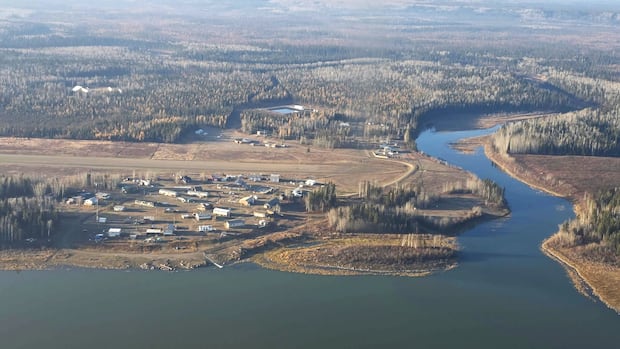
In the Northwest Territories, the Tthets’éhk’édélı̨ First Nation in Jean Marie River has adopted an unconventional method for selecting its leaders. The chief and youth/elder representatives are elected, while four other councillors are chosen by family groups. This innovative system was implemented in 2015 to address community concerns about the conventional Indian Act elections. The new approach has spurred diverse opinions on whether it fosters unity or reinforces family divisions. The small community on the banks of the Mackenzie River, approximately two hours from Fort Simpson, comprises three main families—the Norwegian, Sanguez, and Hardisty families—each represented by a council member. The fourth seat is held by a representative from one of the community's smaller families: Sake, Gargan, or Minoza. The family representative system has been praised by Misty Ireland, who recently completed her three-year term representing the Norwegian family. She believes it encourages political participation among band members who might otherwise remain on the sidelines. However, Marilyn Hardisty, an elder from the community and a former family representative, contends that this system puts undue pressure on small families, as they may have limited candidates to choose from.
A New Approach to Leadership: Jean Marie River's Council of Family Representatives
In the Northwest Territories, the Tthets’éhk’édélı̨ First Nation in Jean Marie River has adopted an unconventional method for selecting its leaders. The chief and youth/elder representatives are elect
NRI Post English Desk · 14 days ago · Updated 1 min ago · 1 min read
🔔 Canada
Get notified when we publish on this topic.
Read more